FIELD NOTE 06 · BUILDING / AFTERLIFE
Look Up: Buildings Are Archives
A ceiling can preserve structure, paint, repair, patronage and the history of looking after a living building.
- READING TIME
- 8 minutes
- SECTIONS
- 5
- REVIEWED
- 18 July 2026
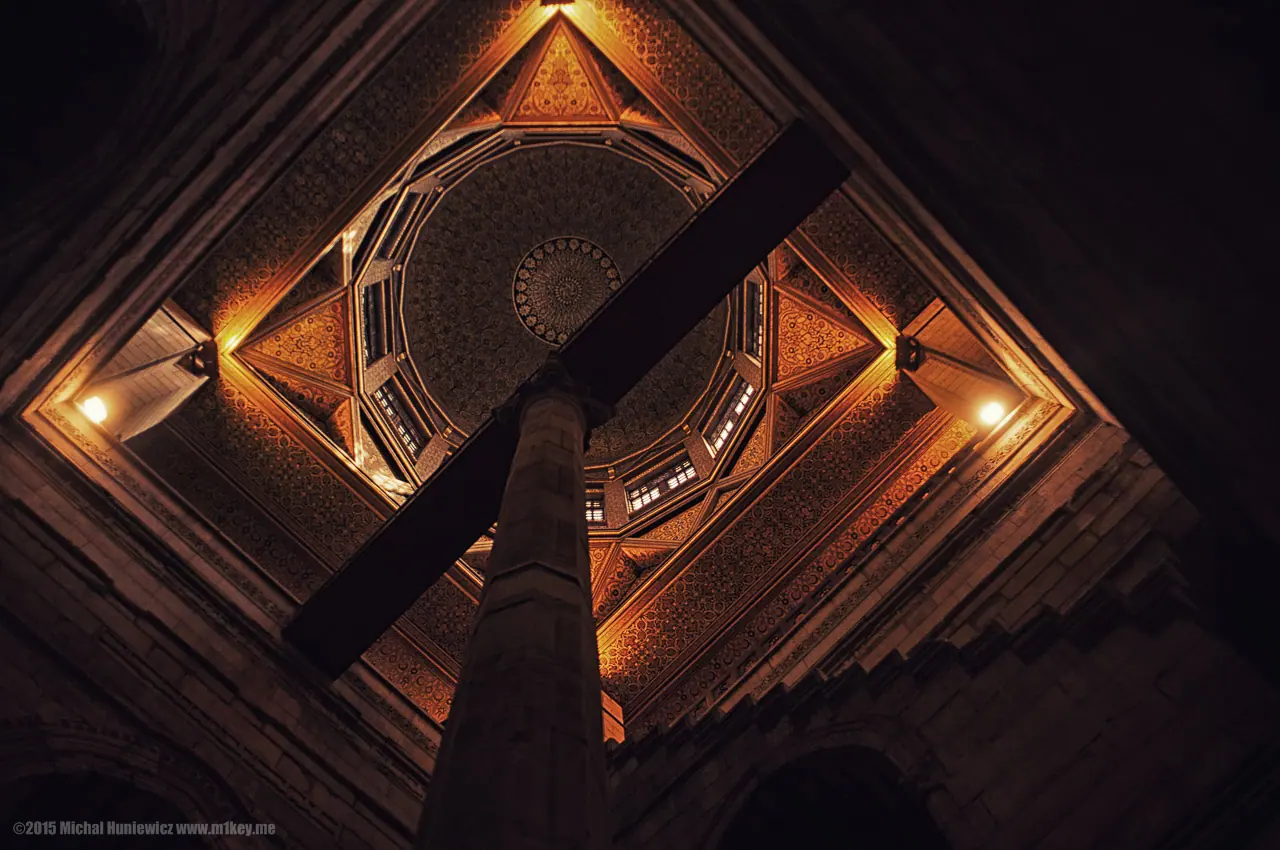
Architectural history often begins with façade and plan. Looking upward brings carpentry, painted surfaces, lighting, maintenance and later interventions into the same field of evidence.
06.01
Structure and ornament work together
Beams, panels and joints carry loads while organizing the painted surface. Decoration cannot be separated entirely from construction: dimensions, assembly and viewing angle shape the pattern a visitor sees.
Record how a surface is built before describing how it looks.
06.02
Craft has a sequence
Timber selection, cutting, joining, preparation, painting and installation involve different skills and moments. Tool marks and layer boundaries can reveal that sequence even when workshops and makers are unnamed.
Anonymous does not mean unskilled or ahistorical.
06.03
Light is part of the encounter
A ceiling is seen at distance and under changing illumination. Modern spotlights and photography can reveal details unavailable in ordinary viewing while producing a false sense that every motif was equally visible at all times.
A photograph is an interpretation of access and light.
06.04
Repair is part of the object
Buildings move, leak, gather soot and receive repairs. Conservation may stabilize wood, clean paint or replace failed elements. Documentation should distinguish original fabric, historical repair and modern intervention without treating every later layer as contamination.
Continuity is often made through careful change.
06.05
A monument remains in a city
Historic architecture belongs to streets, institutions and communities, not only to a heritage inventory. Visitor access, worship, housing, commerce and conservation can place different demands on the same place.
A building’s social setting is evidence, not visual noise around the monument.
STARTING SOURCES
Follow the record.
This note is an editorial introduction, not a catalogue entry. Object-specific identification should be checked against the holding institution’s current record.
- Archnet — Islamic architecture collections
- Museum With No Frontiers — Discover Islamic Art
- UNESCO World Heritage Centre — Historic Cairo