FIELD NOTE 04 · FOOD / LABOUR
Bread Is an Archaeological Archive
A loaf connects grain, grinding, water, heat, labour, preservation and the limits of museum display.
- READING TIME
- 8 minutes
- SECTIONS
- 5
- REVIEWED
- 18 July 2026
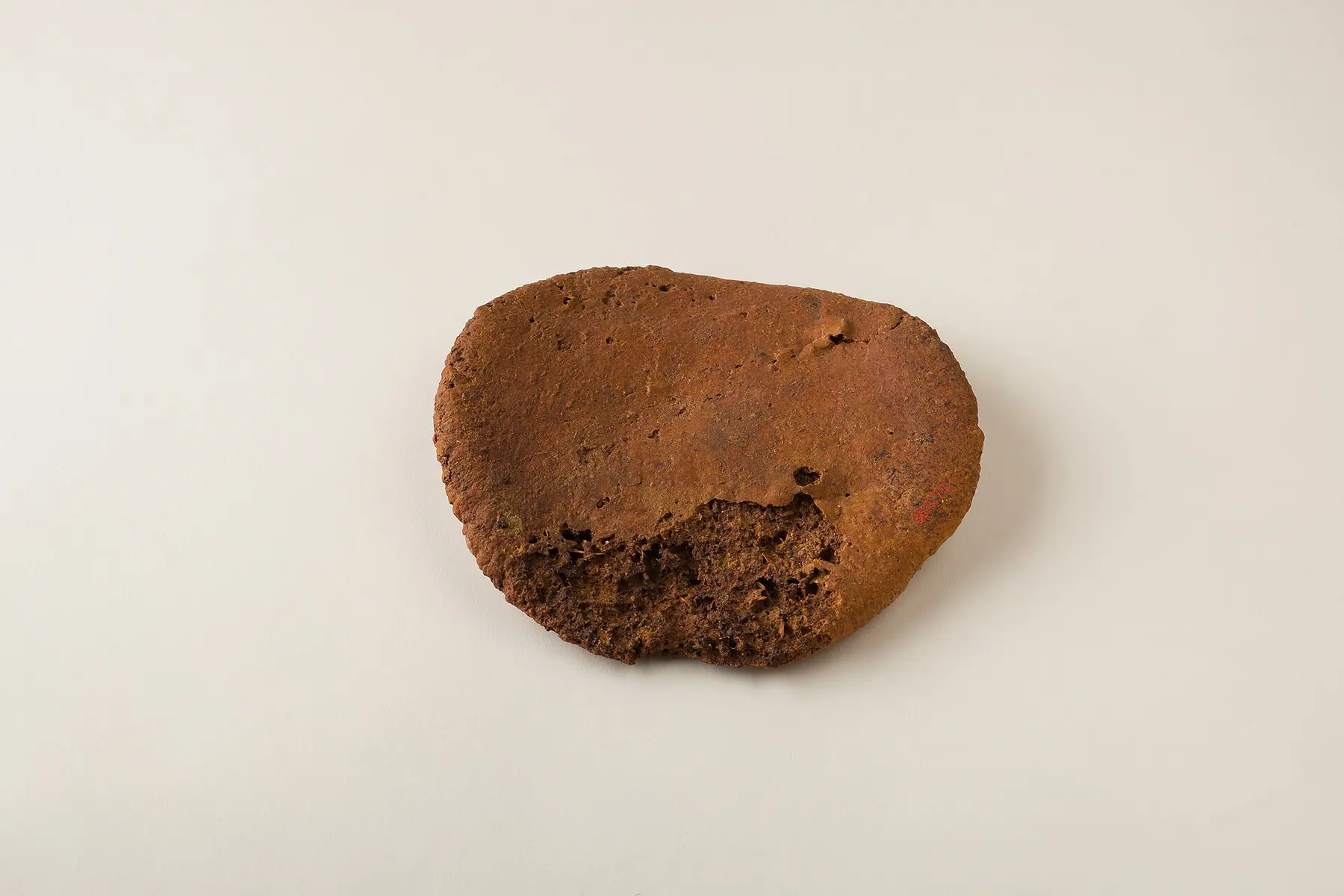
Food rarely survives in a form that looks immediately familiar. When a loaf does, it can tempt a direct story about a meal. Archaeology asks a larger set of questions about ingredients, manufacture, deposition and survival.
04.01
Survival is exceptional
Organic material decays unless burial conditions interrupt the usual process. Egypt’s aridity can preserve plant remains, but preservation varies by place and context. A surviving loaf is therefore evidence both for food and for the conditions that selected it for the archive.
Preserved food is never a neutral sample of an entire diet.
04.02
Microscopic traces widen the recipe
Visual inspection describes shape and surface. Microscopy and experimental comparison can investigate cereal structure, chaff, grinding and possible fermentation. Results should be expressed at the level the evidence supports; identifying a grain is not the same as recovering an exact recipe.
A familiar object can require unfamiliar scales of observation.
04.03
Production reveals labour
Grinding grain, preparing dough and managing ovens required time, fuel, tools and skill. Settlement evidence and administrative texts can connect loaves to household work, institutional supply and rations without assuming one universal baking practice.
Food history is also labour history.
04.04
Deposited food is not an everyday menu
Bread placed in a tomb or temple context may reflect ritual selection. Models and images of food production can express abundance or provision rather than document one ordinary kitchen. Context decides which comparison is responsible.
What people deposited and what people routinely ate overlap imperfectly.
04.05
Display without spectacle
Human remains and food associated with burial can be visually compelling. Ethical interpretation explains origin, collection history, treatment and why the material is displayed. It avoids turning survival itself into a curiosity detached from people and practice.
Recognition should lead to context, not stop at wonder.
STARTING SOURCES
Follow the record.
This note is an editorial introduction, not a catalogue entry. Object-specific identification should be checked against the holding institution’s current record.
- The British Museum — Ancient Egyptian food
- UCL Digital Egypt — Food and drink
- The Metropolitan Museum of Art — Daily life in ancient Egypt