FIELD NOTE 01 · SURFACE / CONTEXT
A Sherd Is Not Small Evidence
A broken vessel can still preserve material, gesture, chronology and context—if the record stays attached.
- READING TIME
- 8 minutes
- SECTIONS
- 5
- REVIEWED
- 18 July 2026
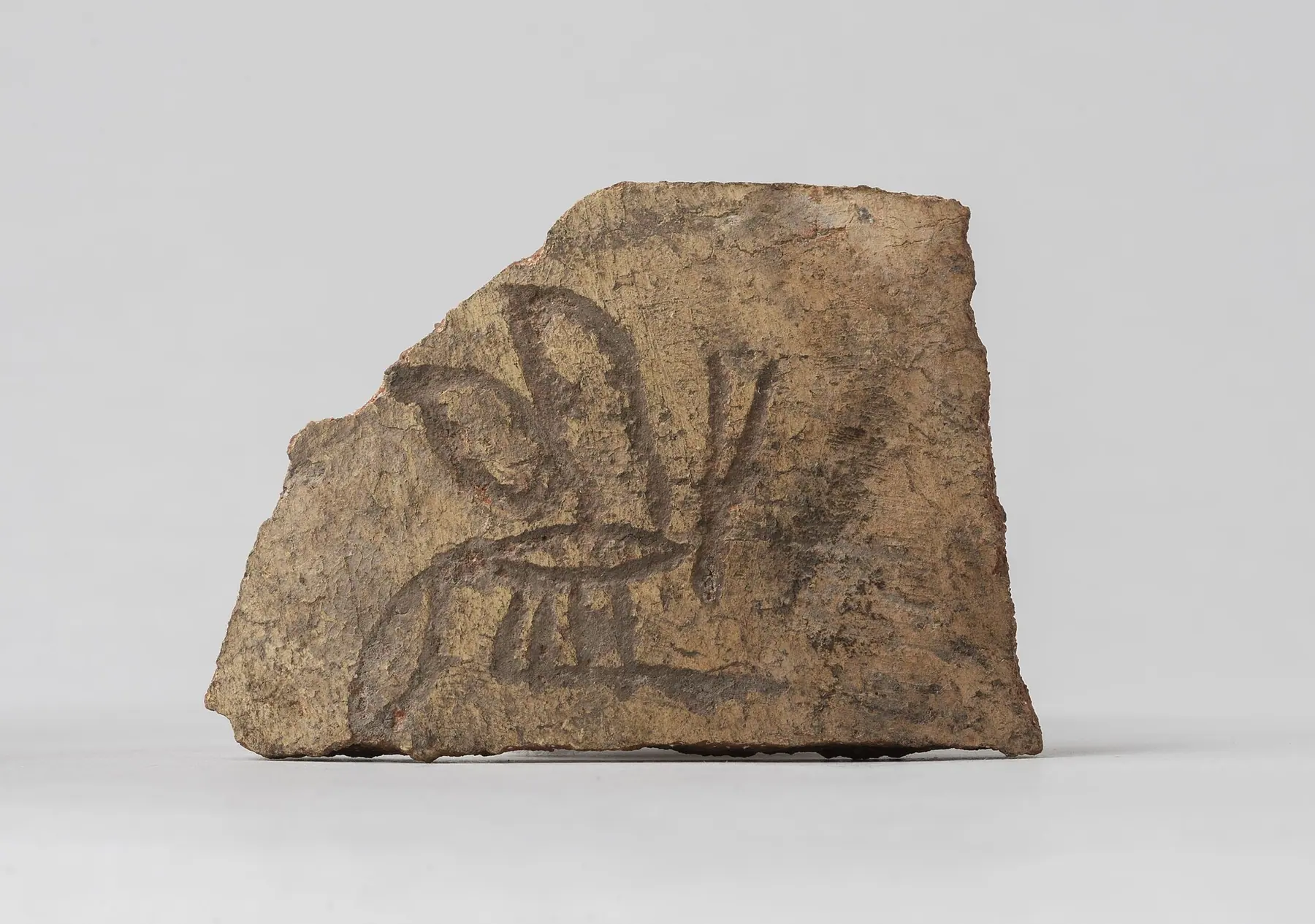
Museum cases favour complete objects. Archaeological interpretation often begins with fragments: common, portable and easy to separate from the place that made them meaningful.
01.01
Begin with the break
A sherd is part of a vessel, not a miniature artwork. Its curve can suggest diameter; its edge can show whether it came from a rim, base or body. Thickness, temper and fracture reveal choices made before decoration entered the story. The first responsible question is therefore structural: what kind of object could this fragment have belonged to?
Observation precedes identification. Record fabric, surface, edge and scale before reaching for a cultural label.
01.02
Context gives the fragment a date
Ceramic sequences are built through repeated associations. A form found in a documented layer can be compared with forms from other controlled contexts. One painted fragment cannot date a site by itself, and a museum object without an excavation record has lost much of its chronological power.
A date is an argument assembled from context and comparison, not a number hidden in the clay.
01.03
Images are not dictionaries
An animal, plant or geometric sign may invite recognition, but resemblance is only a starting point. Motifs shift across places and periods. Interpretation becomes stronger when the image is compared with vessel form, findspot, technique and other examples rather than assigned one timeless symbolic meaning.
Describe what is visible separately from what the motif may have meant.
01.04
Repair the chain of custody
Field number, bag label, context sheet, photograph, drawing, storage location and accession record form a chain. If one link disappears, later researchers may retain the fragment but lose the evidence needed to test earlier claims.
The paperwork is part of the archaeological object.
01.05
Ask what the sample excludes
Excavation, collection and display all select. Fine painted pottery is more likely to be illustrated than coarse cooking ware, while tiny body sherds may remain in storage. A responsible account asks which fragments were retained, counted and published—and which ordinary practices the display leaves invisible.
Absence in a gallery is not evidence of absence in ancient life.
STARTING SOURCES
Follow the record.
This note is an editorial introduction, not a catalogue entry. Object-specific identification should be checked against the holding institution’s current record.
- UCL Digital Egypt for Universities — Pottery
- The Metropolitan Museum of Art — Heilbrunn Timeline of Art History
- Archaeological Institute of America — Archaeology 101